Trekking Through Dense Jungles: A Survival Guide
25 February 2026
Venturing into the depths of a dense jungle is a thrilling experience. The towering trees, the symphony of birds and insects, and the raw beauty of untouched nature make jungle trekking an unforgettable adventure. But let’s be real—jungles aren’t exactly friendly environments. They’re unpredictable, full of hidden dangers, and require a solid game plan.
If you're thinking about embarking on a jungle trek, this survival guide will equip you with the essential knowledge you need to stay safe and make the most of your journey. Let’s dive in!
1. Preparing for the Trek
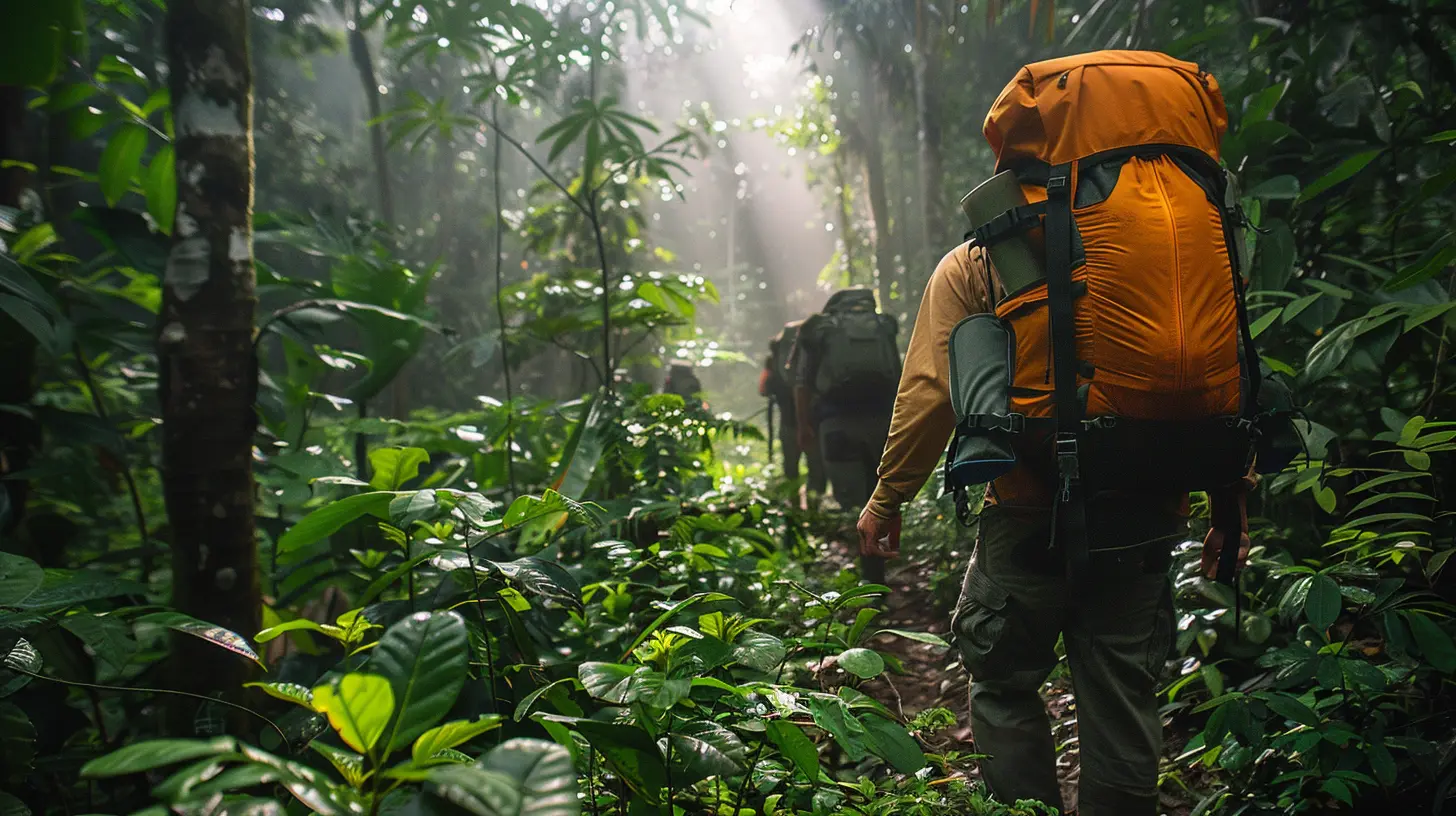
Before setting foot in the jungle, preparation is key. You can’t just wake up one morning, grab a backpack, and march into the unknown. Here’s what you need to do:1.1 Research the Terrain and Climate
Not all jungles are the same. The Amazon is vastly different from the jungles of Southeast Asia or Central Africa. Study the climate, expected weather conditions, and any seasonal challenges (like monsoons or extreme humidity).1.2 Pack Smart
Your backpack is your lifeline in the jungle. Pack these essentials:- Navigation tools: A GPS device, compass, or a detailed map.
- First aid kit: Jungle trekking comes with risks—cuts, bites, and infections are common.
- Water purification system: Streams may look clean, but they can be packed with bacteria.
- Food & energy bars: Lightweight, high-energy food is your best friend.
- Multi-tool/knife: Useful for everything from cutting vines to preparing food.
- Lightweight hammock/tent: The ground is full of insects and snakes. Sleeping off the ground is a must.
- Long-sleeve clothing & pants: Protect yourself from bugs, thorns, and the sun.
- Rain gear: Rain is almost inevitable in a jungle.
1.3 Physical Fitness Matters
Jungle trekking is no walk in the park. You’ll be sweating buckets, climbing over fallen trees, and wading through rivers. Build your stamina with cardio workouts, hiking practice, and strength training.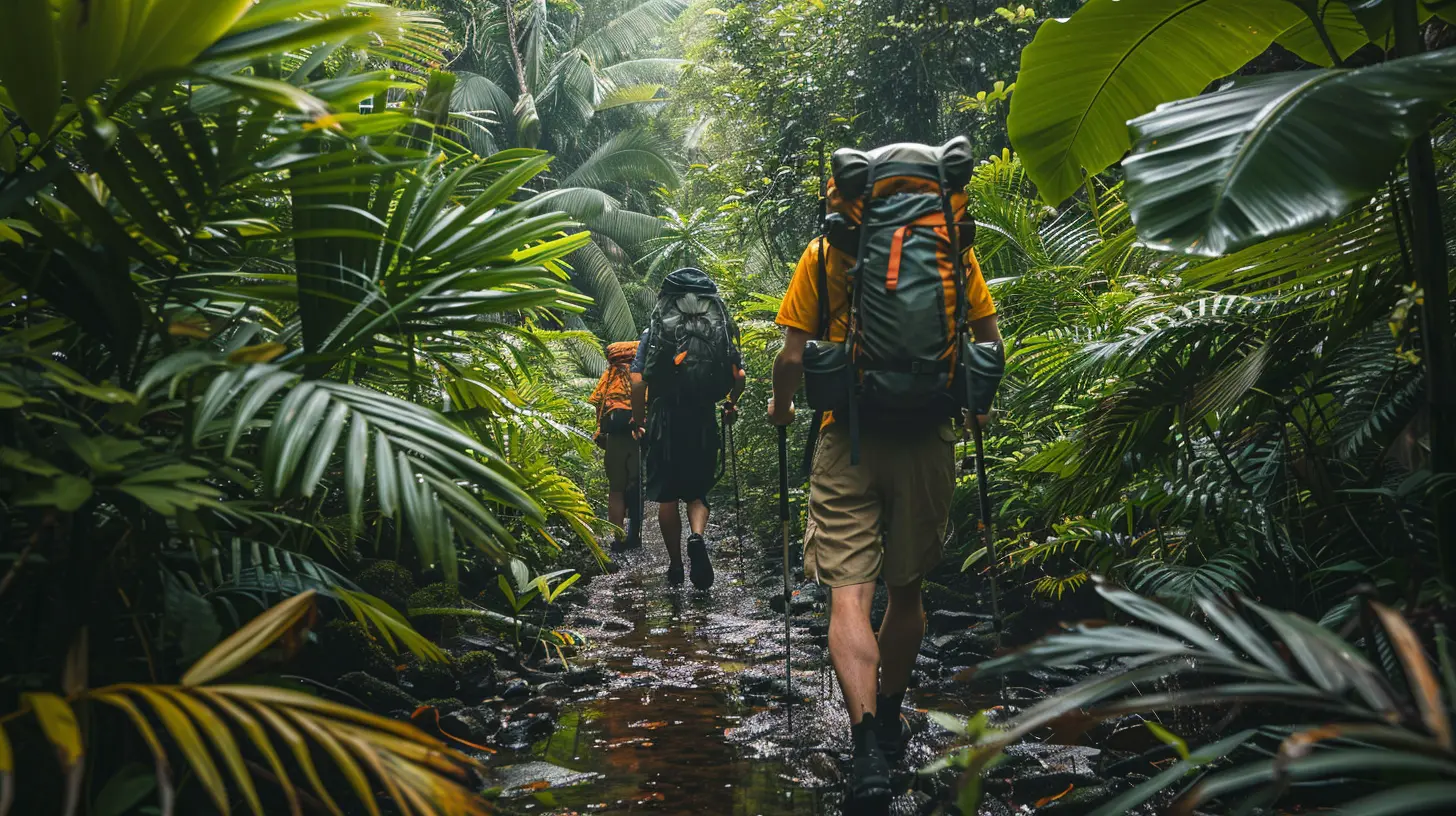
2. Navigating the Jungle
Once you’re inside, the real adventure begins. Knowing how to navigate safely is crucial.2.1 Stay on Marked Trails
It might be tempting to veer off the beaten path, but jungles are notorious for disorienting even the most experienced trekkers. If there are marked trails, stick to them.2.2 Pay Attention to Natural Landmarks
Dense jungles can feel like a maze. Use distinctive trees, rock formations, or rivers to orient yourself.2.3 Use the Sun & Stars
- In the daytime, the sun’s direction can help you maintain a general course.- At night, if you can spot the North Star or other constellations, you’ll have a backup navigation method.
3. Surviving in the Jungle
Survival in the jungle is about more than just moving forward—it’s about staying safe from nature’s many challenges.3.1 Water is Life
Finding clean water should be your top priority. Look for:- Flowing streams (avoid stagnant water).
- Collecting rainwater using a tarp or large leaves.
- Bamboo stalks (some hold drinkable water inside).
Always purify the water with purification tablets or by boiling it before drinking.
3.2 Food Sources
You won’t find a grocery store in the wilderness, but there are plenty of edible options:- Fruits & nuts: Learn which ones are safe to eat. Some, like wild bananas and coconuts, are reliable sources.
- Insects: While not appetizing, they’re protein-rich (ants, termites, and crickets are good choices).
- Fishing & trapping: If you have experience, small fish and even trapping small animals can be a food source.
3.3 Protection from Wildlife
The jungle is home to all sorts of creatures—some harmless, some deadly.- Snakes: Avoid stepping over logs without checking the other side.
- Big cats (Jaguars, tigers, etc.): Stay in groups and avoid moving silently; making noise alerts animals that you're not an easy target.
- Insects: Mosquitoes can carry diseases. Wear repellent and long clothing to minimize bites.
3.4 Building a Shelter
A good night’s rest is crucial for keeping your energy up.- Use a hammock if you have one—keeping off the ground reduces exposure to insects and snakes.
- If you need to build a shelter, lean branches against a tree and cover them with large leaves.
- Choose a dry area away from stagnant water (mosquito breeding ground) and far from animal trails.
4. Jungle Communication & Emergency Procedures
4.1 Signaling for Help
If you get lost, knowing how to signal for rescue can make all the difference.- Whistle blasts: Three short whistle blows are an international distress signal.
- Smoke signals: If you can start a fire, thick smoke is visible from afar.
- Mirrors or shiny objects: Reflecting sunlight can attract attention from aircraft or distant rescuers.
4.2 Stay Calm & Conserve Energy
Panic is your worst enemy. If you find yourself lost:1. Stop and take deep breaths.
2. Assess your surroundings.
3. Decide on a plan—either staying put or finding a reliable landmark like a river to follow.
5. Final Tips for a Successful Jungle Trek
- Go With A Guide: If you’re new to jungle trekking, travel with an experienced guide.- Travel in a Group: There’s safety in numbers.
- Respect Nature: Leave no trace—don’t litter, and avoid disturbing wildlife.
- Trust Your Instincts: If something feels off, adjust your plan.
Conclusion
Jungle trekking is an adventure like no other. It tests your endurance, resilience, and ability to adapt. While it can be dangerous, the right preparation and survival skills can make it an unforgettable and safe experience.So, if you’re gearing up for your next jungle trek, remember—stay prepared, stay alert, and most importantly, enjoy the wild beauty of nature!
all images in this post were generated using AI tools
Category:
Adventure SportsAuthor:

Tracie McAdams
Discussion
rate this article
2 comments
Sawyer McInnes
Trekking through dense jungles can be both exhilarating and challenging. Preparation is key; ensure you have proper gear, navigation tools, and knowledge of local wildlife. Understanding the terrain and weather patterns is crucial for safety. Respect the environment and leave no trace to preserve its beauty.
February 27, 2026 at 4:49 PM
Tracie McAdams
Absolutely, preparation and respect for the environment are vital for a safe and enjoyable jungle trek! Thank you for emphasizing these important points.
Cody McFee
When trekking through dense jungles, preparation is key. Equip yourself with the right gear, including sturdy footwear, a reliable compass, and sufficient water. Always inform someone of your route, stay aware of your surroundings, and respect local wildlife. Safety should be your top priority.
February 25, 2026 at 3:58 AM
Tracie McAdams
Absolutely! Proper preparation is essential for jungle trekking. Gear up wisely, stay safe, and respect nature. Thanks for sharing!