One World, Many Histories: UNESCO’s Most Diverse Sites
3 March 2026
History is a patchwork quilt—every culture, every civilization stitches in its own unique patterns, creating a tapestry that stretches across time and geography. It’s fascinating how different places carry stories from the past, preserving them like an old, cherished book. And when it comes to safeguarding these incredible stories, UNESCO does an exceptional job.
From ancient ruins buried deep in jungles to futuristic cities that blend culture with progress, UNESCO World Heritage Sites are proof that history comes in many forms. So, let’s take a closer look at some of the most diverse UNESCO sites that tell the story of humanity in ways you wouldn’t expect. 
1. Machu Picchu, Peru – The Lost City of the Incas
Perched high in the Andes Mountains like a hidden treasure chest, Machu Picchu stands as a mysterious relic of the Incan Empire. Built in the 15th century and later abandoned, this ancient city remained a secret to the outside world until its rediscovery in 1911.Walking through Machu Picchu is like stepping into a time machine. The finely carved stone walls, intricate terraces, and breathtaking views suggest the incredible engineering skills of the Incas. But what’s even more awe-inspiring is the fact that no mortar was used to hold the structures together—just a masterful understanding of nature and balance.
It’s no wonder this site draws millions of visitors every year. But if you want to avoid the crowds, consider going early in the morning when the mist slowly lifts, revealing the city like a long-lost dream coming to life. 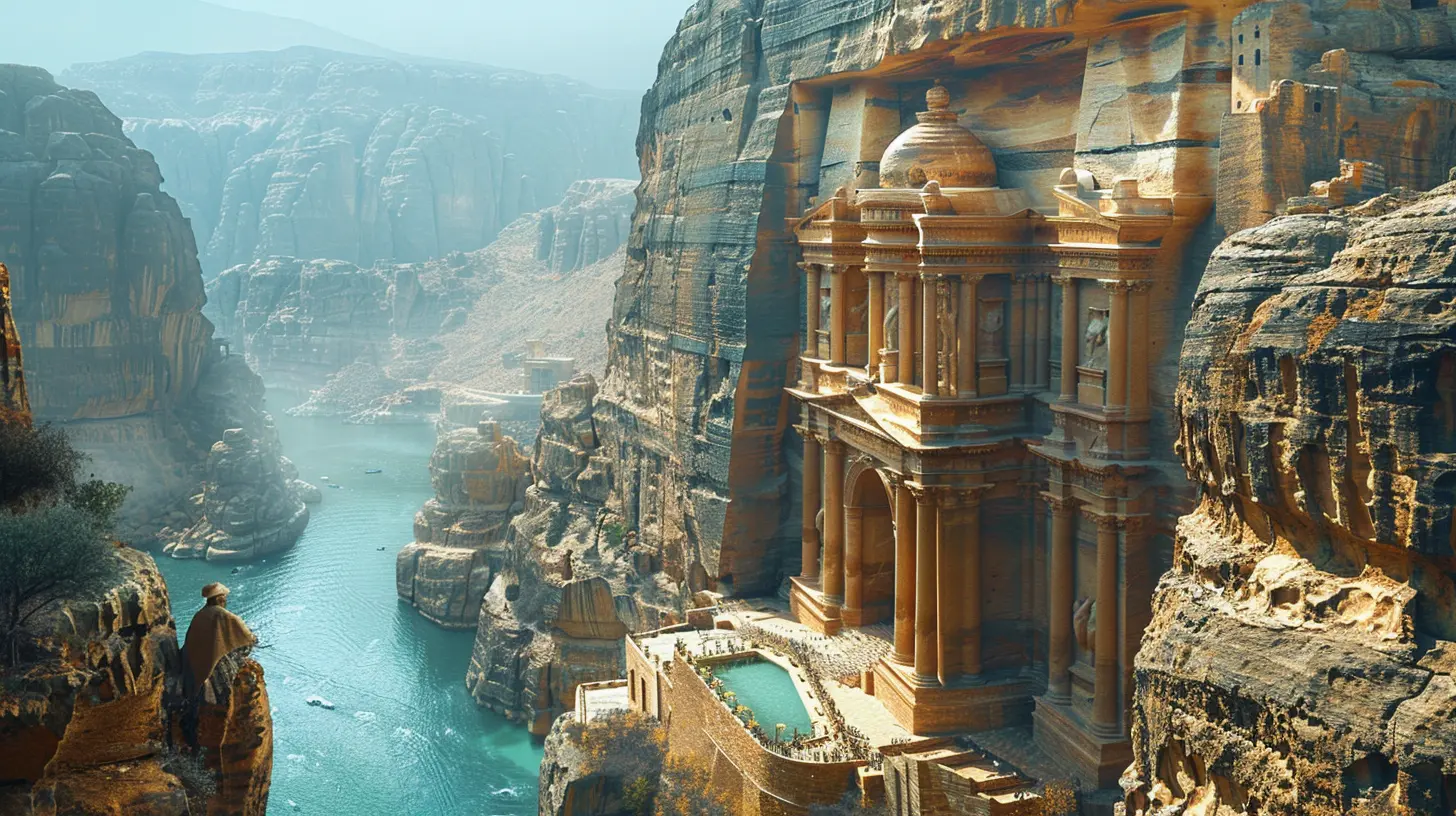
2. Petra, Jordan – The Rose-Red City
Imagine walking through a narrow gorge, with towering cliffs on either side, only to arrive at a breathtaking sight—a city carved entirely into red sandstone. That’s Petra, Jordan’s most famous archaeological wonder.Believed to have been established in the 4th century BC by the Nabataeans, Petra was a thriving trade hub. Its most famous structure, Al-Khazneh (or "The Treasury"), looks like something straight out of an Indiana Jones movie. And honestly, standing in front of it feels surreal.
What makes Petra even more fascinating? It wasn’t just a city; it was a melting pot of different civilizations, including the Greeks, Romans, and Arabs. Their influences are etched into the architecture, making Petra a true masterpiece of cultural diversity. 
3. The Great Wall of China – A Monument to Perseverance
Stretching over 13,000 miles, the Great Wall of China isn’t just a wall—it’s a spine that runs through the history of an entire nation. Built over centuries by different Chinese dynasties, its purpose was to protect the empire from invasions.Some parts of the wall are well-preserved, while others have been battered by time. But regardless of where you visit, walking along the Great Wall is both humbling and exhilarating. Just imagine the sheer manpower and determination it took to construct something of this scale!
And here’s a fun fact: despite the common myth, you can’t see it from space with the naked eye. But honestly, standing on it and looking at the endless landscape stretching ahead is just as incredible. 
4. Timbuktu, Mali – The Centre of Knowledge
When people say "Timbuktu," they often mean a place far away, almost mythical. But Timbuktu is very real, and at one point, it was one of the most important intellectual centers in the world.During the 14th and 15th centuries, this city in Mali was a hub of trade and education. Scholars from different parts of Africa and the Middle East gathered here to study subjects ranging from astronomy to medicine. The city’s ancient mosques and libraries, like the Sankore University, still hold manuscripts dating back hundreds of years.
Today, Timbuktu faces challenges due to desertification and conflicts, but its historical significance remains untouched. It’s a reminder that Africa was home to thriving civilizations long before colonial times—a narrative that deserves more recognition.
5. Venice, Italy – The Floating City
Venice is like a dream woven out of water and stone—a city built on a lagoon, where streets are canals and buses are boats. With its stunning architecture and rich history, it’s no surprise Venice is a UNESCO World Heritage Site.From the grandeur of St. Mark’s Basilica to the charm of the narrow alleyways, Venice is nothing short of magical. But beyond its postcard-perfect beauty, the city has an important cultural significance. It was a powerhouse of trade and art during the Renaissance, attracting merchants, musicians, and painters from around the world.
Unfortunately, Venice is sinking—literally. Rising sea levels and heavy tourism have taken a toll on this fragile city. Visiting responsibly, such as avoiding peak seasons and respecting local culture, is crucial if we want to keep this floating masterpiece alive for future generations.
6. The Pyramids of Giza, Egypt – A Testament to Ancient Engineering
The Great Pyramid of Giza is the only surviving wonder of the ancient world, and honestly, it’s a mind-boggling feat of engineering. Built over 4,500 years ago, these enormous structures still stand tall, challenging modern architects to explain how they were created with such precision.Each massive limestone block, some weighing more than 15 tons, was transported and arranged with astonishing accuracy. Were aliens involved? Probably not—but the genius of ancient Egyptian builders certainly was!
Standing before the pyramids, with the Sphinx quietly watching over, is enough to make anyone feel small in the grand scale of history. And yet, that’s the beauty of visiting places like this—it reminds us of the incredible things humans have achieved.
7. Kyoto, Japan – A Living Legacy of Tradition
If you ever find yourself in Kyoto, you’ll feel like you’ve stepped into a different era. With its centuries-old temples, traditional tea houses, and streets lined with wooden buildings, Kyoto is a living time capsule of Japan’s rich heritage.One of the most iconic spots here is Fushimi Inari Shrine, famous for its thousands of vermillion torii gates leading up a mountain path. Then there’s Kinkaku-ji, the Golden Pavilion, which gleams under the sunlight like something out of a fairytale.
Unlike many historical cities, Kyoto isn’t just about ruins or museums—it’s about living history. People still practice tea ceremonies, wear kimono, and follow traditions passed down through generations. It’s proof that history isn’t just about what’s preserved but also what’s practiced.
Conclusion
UNESCO’s diverse heritage sites remind us that history isn’t just a collection of dates and facts—it’s the story of humanity itself. Each site, whether an ancient ruin or a thriving city, carries echoes of the past and lessons for the future.So, if you ever get the chance to visit any of these places, take a moment to absorb their stories. Because in the end, history isn’t just written in books—it’s etched into landscapes, carved into stones, and whispered through the walls of ancient cities.
all images in this post were generated using AI tools
Category:
World Heritage SitesAuthor:

Tracie McAdams
Discussion
rate this article
2 comments
Seraphine Pope
Grateful for these rich, shared stories.
March 5, 2026 at 4:47 PM
Tracie McAdams
Thank you! I'm glad you appreciate the stories that highlight our diverse histories.
Isabella Morrow
Unlock hidden tales within each UNESCO treasure.
March 3, 2026 at 4:31 AM
Tracie McAdams
Absolutely! Each site has its own unique story waiting to be discovered.