Bridges Across Time: UNESCO Sites Linking the Past and Present
13 January 2026
Bridges aren't just pieces of infrastructure that help us cross rivers or valleys—they're monuments to human ingenuity and endurance. Some have stood for centuries, connecting not just distant lands but also past and present civilizations. Many of these structures are so rich in history and cultural significance that UNESCO has recognized them as World Heritage Sites.
In this article, we’ll take a journey through time, crossing some of the most extraordinary UNESCO-listed bridges worldwide. These bridges are more than just passageways—they’re storytellers, whispering tales of ancient empires, medieval merchants, and architectural brilliance.

1. The Ponte Vecchio (Italy) – A Bridge Lined with History
Nestled in the heart of Florence, the Ponte Vecchio isn’t just a stone bridge—it’s a living, breathing piece of history. Built in the 14th century, it spans the Arno River and is famous for something rather unusual: it hosts a row of shops on top.Originally home to butchers and tanners, the bridge’s storefronts now house jewelers and art dealers. It survived bombings during World War II, thanks to a direct order from Hitler himself to spare it. Strolling across this bridge feels like stepping back in time, with its quaint shops and charming arches transporting visitors to Renaissance-era Florence.
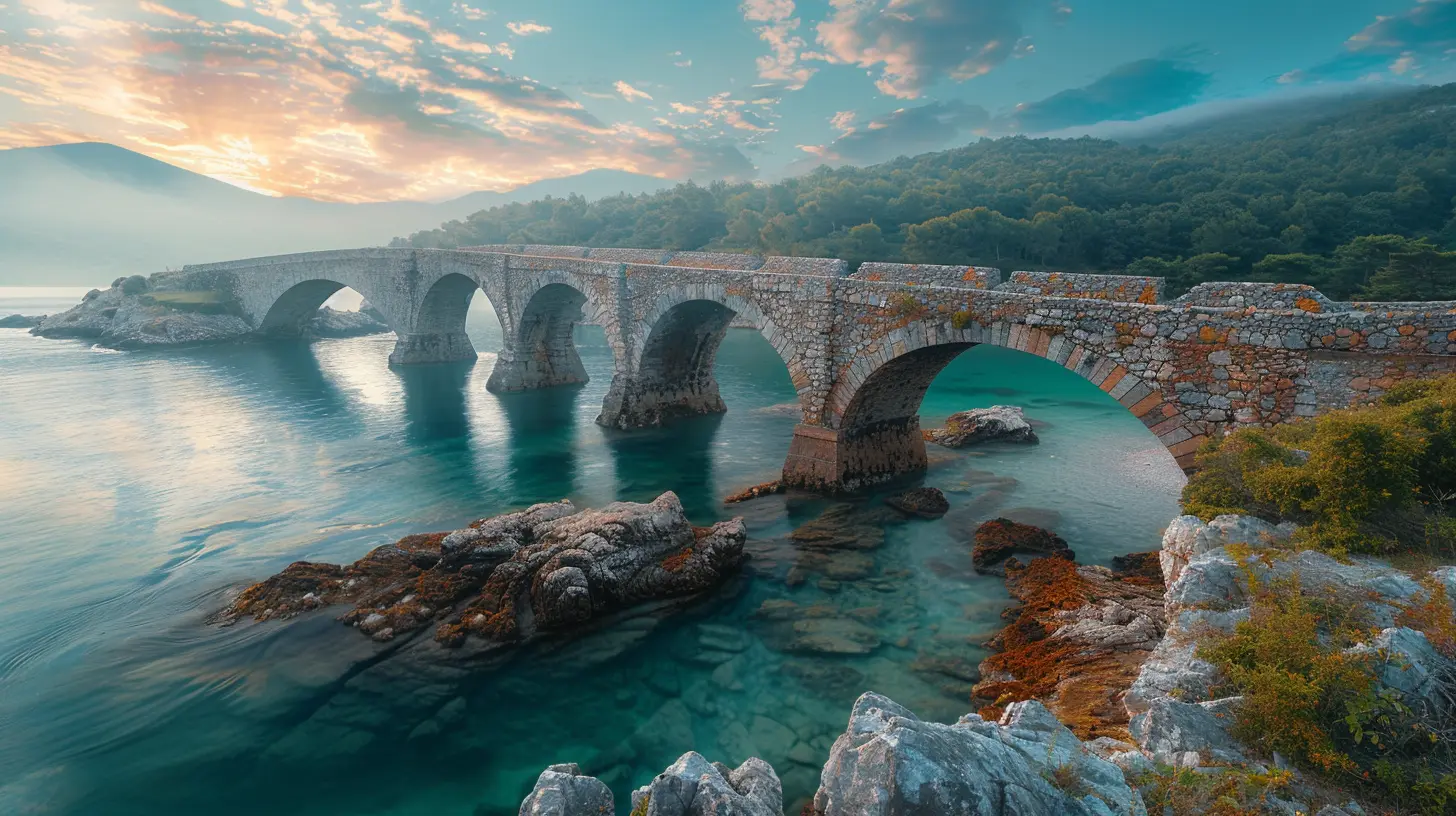
2. Stari Most (Bosnia and Herzegovina) – Resilience in Stone
Stari Most, meaning “Old Bridge,” has a heartbreaking yet inspiring history. Built in the 16th century under Ottoman rule, it stood as a symbol of unity in Mostar for over 400 years—until war shattered it in 1993.The bridge was later painstakingly rebuilt in 2004 using original materials and techniques, a testament to resilience and cultural heritage. Today, it serves as a powerful reminder of the strength of communities and their ability to rebuild after devastation. And if you're lucky, you might witness the famous tradition of divers leaping from its 24-meter height into the Neretva River below!

3. Tower Bridge (United Kingdom) – Where Function Meets Majesty
No visit to London is complete without marveling at the Tower Bridge, arguably the world’s most iconic drawbridge. Completed in 1894, it’s a blend of Gothic architecture and Victorian engineering genius.What makes it special? It can split in two! The bascules (massive counterweighted sections) lift to allow ships to pass. Walking across its glass floor gives visitors a one-of-a-kind perspective of the bustling Thames below. It’s not just a bridge—it’s a landmark that perfectly embodies London’s rich industrial heritage.

4. Charles Bridge (Czech Republic) – A Medieval Masterpiece
Prague’s Charles Bridge is nothing short of magical. This 14th-century Gothic bridge stretches across the Vltava River, its cobblestones worn smooth by centuries of foot traffic. It’s adorned with 30 statues of saints, adding to its mystical atmosphere.Legend has it that King Charles IV laid the first stone at an exact astrological hour to ensure its longevity. Whether or not that’s true, the bridge has certainly withstood the test of time, surviving floods and political changes. Today, it’s a vibrant spot filled with musicians, artists, and tourists soaking in Prague’s old-world charm.
5. Pont du Gard (France) – A Roman Marvel
The Pont du Gard isn’t just a bridge—it’s an ancient aqueduct that the Romans built in the 1st century AD. Rising 160 feet above the Gardon River, this three-tiered structure is an outstanding example of Roman engineering.What’s astonishing is that it was built without mortar, yet it has stood for nearly two millennia! The Romans used it to transport water to the colony of Nîmes, demonstrating their advanced understanding of hydraulics and architecture. Today, visitors can walk along its path and admire this awe-inspiring marvel of the ancient world.
6. The Forth Bridge (Scotland) – A Steel Giant
Scotland’s Forth Bridge, completed in 1890, is a masterpiece of the Industrial Age. This striking red cantilever railway bridge spans the Firth of Forth, connecting Edinburgh to Fife.At the time of its construction, it was the longest cantilever bridge in the world. Over a century later, it still carries trains daily. Its distinctive design inspired engineering projects worldwide, and its durability gave birth to the famous phrase, “painting the Forth Bridge,” referring to any endless task.
7. The Rialto Bridge (Italy) – Venice’s Timeless Wonder
Venice is a city of bridges, but none are as famous as the Rialto Bridge. Built in the late 16th century, it was the first structure to permanently span the Grand Canal.Its elegant stone arch and bustling shops make it one of Venice’s most photographed landmarks. In medieval times, it was the heart of Venice's financial district, with merchants selling goods right on the bridge. Walking across it today, you can almost hear the echoes of traders haggling over silk and spices.
8. The Chengyang Wind and Rain Bridge (China) – A Wooden Masterpiece
China’s Chengyang Bridge is unlike any other. Built in 1912 without a single nail, this "wind and rain" bridge seamlessly blends architecture with nature.Located in the Guangxi province, it was constructed by the Dong ethnic minority, using a system of interlocking wooden pieces. The bridge serves as more than just a crossing—it's a communal gathering space, sheltering travelers from wind and rain while offering breathtaking views of rice fields and rivers.
9. The Mehmed Paša Sokolović Bridge (Bosnia and Herzegovina) – Ottoman Grandeur
Designed by the legendary Ottoman architect Mimar Sinan in the 16th century, this stunning bridge in Višegrad spans the Drina River with elegant arches.It’s not just a bridge—it’s a monument to a golden age of architecture. Immortalized in Nobel Prize-winning author Ivo Andrić’s novel The Bridge on the Drina, it holds deep cultural significance and remains a symbol of Bosnia’s diverse heritage.
Why These Bridges Matter
Bridges are more than just crossings. They represent connection, resilience, and innovation. Each of these UNESCO-listed bridges tells a unique story of the era, culture, and people who built them.So, the next time you're walking across an ancient or historic bridge, pause for a moment. Think about those who walked before you—medieval merchants, Renaissance artists, Roman engineers, or even war survivors. These structures have stood the test of time, and in doing so, they continue to bridge the past with the present.
all images in this post were generated using AI tools
Category:
World Heritage SitesAuthor:

Tracie McAdams
Discussion
rate this article
2 comments
Nolan McDaniel
Exploring UNESCO sites reveals how bridges transcend mere architecture, connecting cultures and histories. Each structure narrates a story, reflecting the ingenuity and resilience of past civilizations while inspiring present and future generations to cherish and preserve our shared heritage.
February 4, 2026 at 4:13 PM
Tracie McAdams
Thank you for your thoughtful comment! I completely agree—bridges are not just functional structures; they embody the rich narratives of cultures and histories, reminding us of our shared heritage.
Henrietta McKittrick
UNESCO sites are invaluable treasures that connect us to our history. Exploring these bridges across time enriches our understanding and appreciation of diverse cultures and heritage.
January 15, 2026 at 4:12 PM
Tracie McAdams
Thank you! Absolutely, UNESCO sites serve as vital connections to our shared history, allowing us to appreciate and learn from the rich tapestry of human culture.